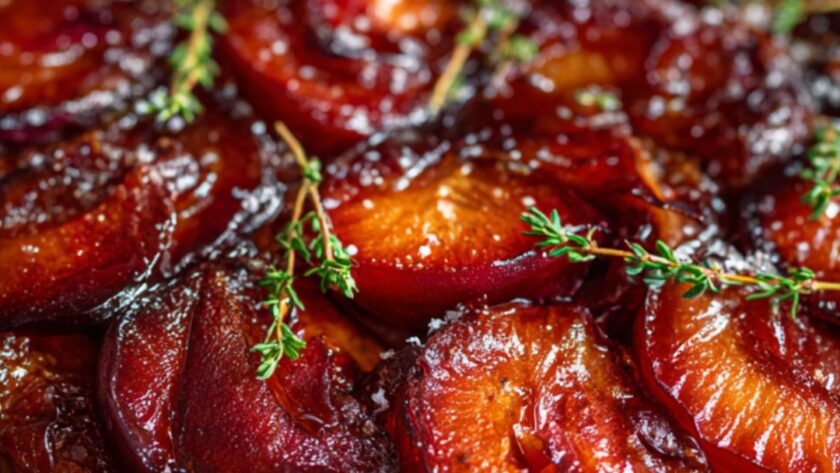
James Martin Plum Tarte Tatin is a gorgeous flat tart built on a thin, yeasted bread dough and piled with vanilla vodka-marinated plum wedges, salted Breton butter, and a generous scatter of demerara sugar, and the whole thing comes together in just over an hour. The dough is simpler than it sounds, so do not let the bread base put you off.
I spotted this on jamesmartinchef.co.uk, where James Martin made it with master baker Richard Bertinet on his Saturday Morning series, and the combination of bread dough and vanilla vodka-marinated plums stopped me mid-scroll. Technically it is a Tart Flambée, but calling it a Tarte Tatin feels right since the plums caramelise under that demerara sugar in exactly the same spirit.
The vanilla vodka marinade is the bit that makes this tart taste like something you would order in a French bistro rather than pull out of your own oven, because it draws out the plum juices and perfumes the dough as it bakes. James Martin drains the plums before topping so the base stays crisp.
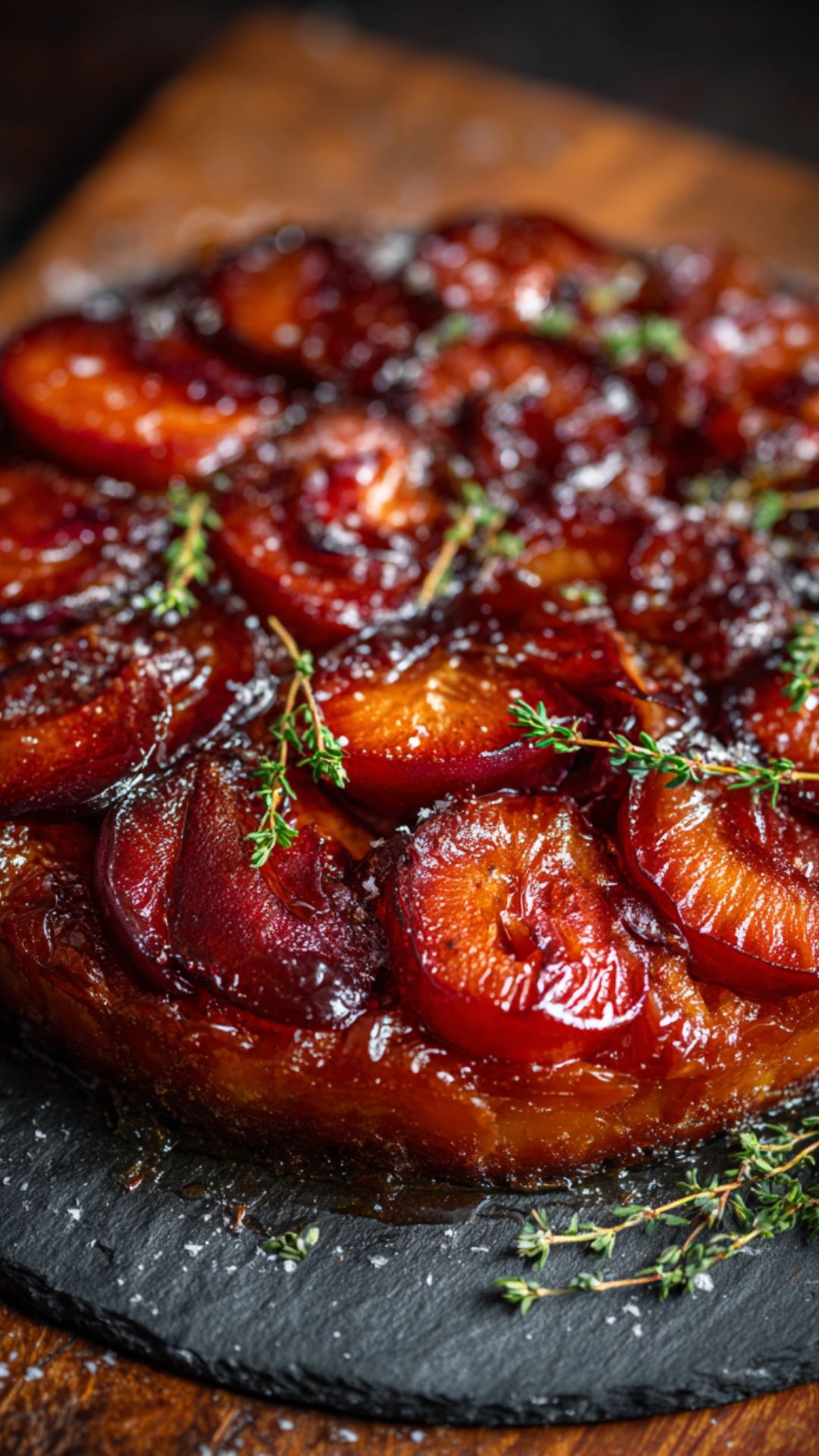

James Martin Plum Tarte Tatin
Description
A yeasted flatbread base topped with vanilla vodka-marinated plum wedges, salted Breton butter, and a scatter of demerara sugar, then baked hot and fast at 190°C fan for 15 minutes. The dough needs a 20-minute rest before rolling so plan accordingly.
Ingredients
For the dough:
For the filling:
Instructions
- Preheat the oven: Set the oven to 190°C fan.
- Make the dough: Rub the yeast into the flour, or mix it straight in if using dried. Add the salt and water and mix well for a couple of minutes until the dough starts to come together.
- Work the dough: Transfer onto your work surface and stretch the dough out, folding it back over onto itself repeatedly until it comes cleanly away from the surface and is no longer sticky.
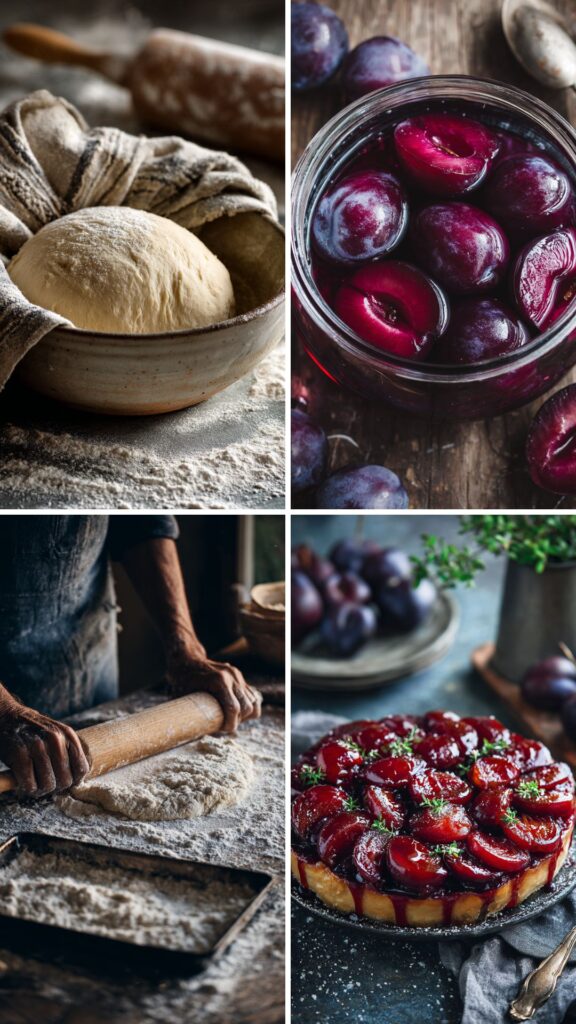
- Rest the dough: Shape into a ball, place in a bowl, cover with a tea towel, and rest for at least 20 minutes somewhere draught-free — a kitchen cupboard works perfectly.
- Marinate the plums: Cut the plums into wedges, remove the stones, and leave them to sit in a small amount of vanilla vodka while the dough rests.
- Roll the dough: Turn the rested dough onto a well-floured surface, press flat with your hand first, then roll out thinly with a rolling pin. Lay it onto a lightly floured baking tray.
- Top and bake: Drain the plum wedges and arrange them over the dough. Dot the butter across the top and sprinkle the demerara sugar evenly over everything. Bake for about 15 minutes until the dough is cooked through and the sugar has caramelised, then serve straight away.
FAQs
Can I use dried yeast instead of fresh?
Fresh yeast gives you a slightly softer, more flavourful dough, but dried works perfectly well here since this is a thin flatbread base rather than a proper loaf that needs serious rise. Use 7g of dried yeast in place of the 10g fresh and mix it straight into the flour rather than rubbing it in. The 20-minute rest stays exactly the same either way.
What if I cannot find vanilla vodka?
Plain vodka with a teaspoon of vanilla extract stirred in does the same job, because the spirit is really just a vehicle for getting that vanilla fragrance into the plum flesh during marinating. A small splash is genuinely all you need, so do not feel like you have to hunt down a specialist bottle. The plums only sit in it for 20 minutes while the dough rests.
Which plums work best for this tart?
Victoria plums are the obvious British choice and they caramelise beautifully under the demerara sugar in the time the dough takes to bake through. Any ripe plum will do the job though, since softer fruit releases its juices faster and gives you that jammy, sticky finish you want. Avoid anything rock hard straight from the fridge because it will still be firm when the dough is done.
Can I make the dough the night before?
Yes, cover it with cling film instead of a tea towel and leave it in the fridge overnight, since a slow cold rest develops more flavour than a quick 20-minute room temperature prove. Take it out about 15 minutes before rolling so it relaxes and stretches without springing back. It is a brilliant way to split the work across two days.
What is the difference between a Tart Flambée and a Tarte Tatin?
A Tarte Tatin is an upside-down caramelised tart made with pastry, like the one in Apple Tarte Tatin, while a Tart Flambée is a flat open tart baked on bread dough with toppings laid straight on top. This recipe follows the Tart Flambée method but the plums caramelise in the same way so the two feel like cousins. Both are brilliant with stone fruit in autumn.
Can I use regular salted butter instead of Breton butter?
Regular salted butter works fine since its role here is simply to baste the plums and help the sugar caramelise as the tart bakes. Breton butter has a slightly higher salt content and a nuttier flavour, so you will notice a small difference but nothing that ruins the result. Unsalted is the one to avoid because the salt balances the sweetness of the demerara, similar to how butter works in Pear Tarte Tatin.