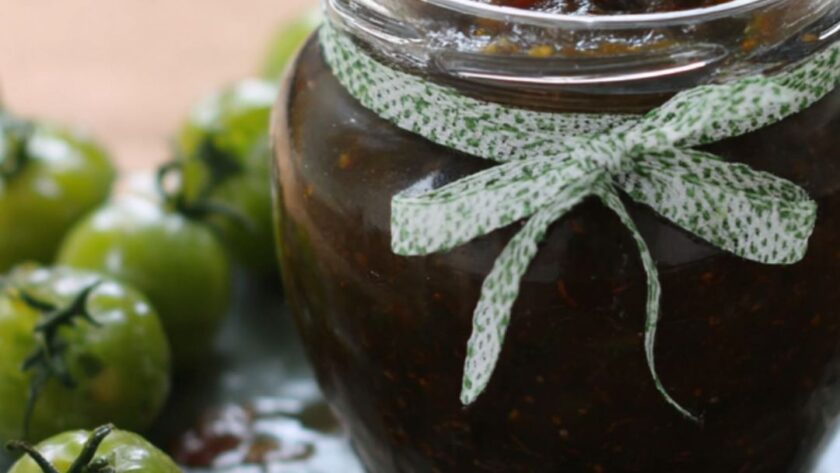
James Martin Green Tomato Chutney is a thick, tangy preserve made from quartered green tomatoes simmered with caramelised sugar, white wine vinegar, shallot, garlic, ginger, red chilli, and sultanas for about an hour. It fills several sterilised jars and keeps for months in a cool cupboard.
This recipe comes from BBC Saturday Kitchen, where he says it is the best way to use up unripened tomatoes from the garden. He caramelises the sugar dry in the pan first before adding anything else, which builds a toffee-like base that you cannot get by just dissolving sugar into vinegar.
The chutney is ready when you drag a wooden spoon across the bottom of the pan and the channel stays open instead of filling back with liquid. Pull it off too early and it stays runny in the jar, but push it too far and the sugars harden and turn bitter once they cool..
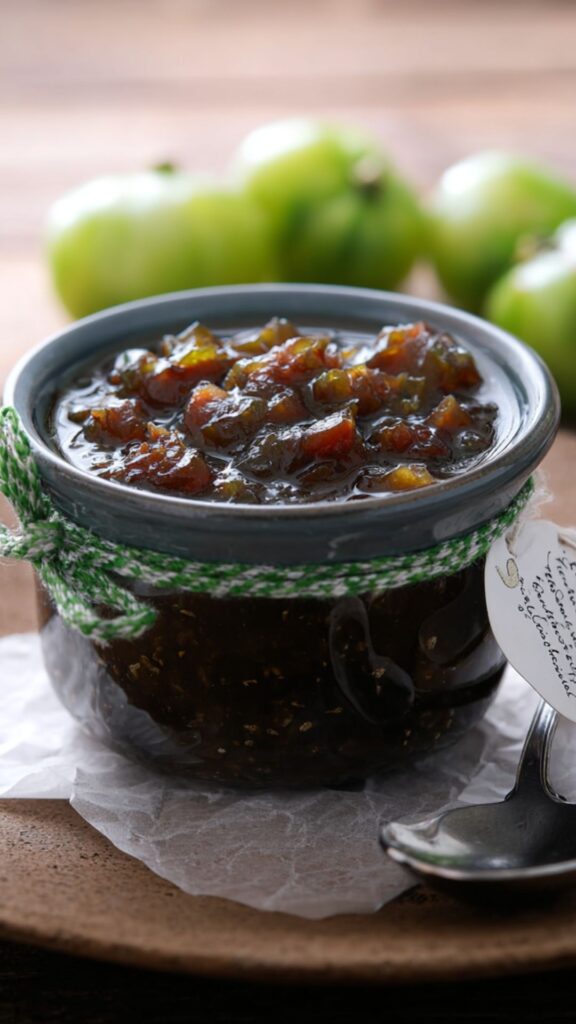

James Martin Green Tomato Chutney
Description
Tangy, thick, and full of warm spice from ginger and fresh chilli, this green tomato chutney fills about four jars and improves with age. Best served after two weeks in the cupboard when the vinegar mellows and the flavours settle into each other.
Ingredients
Instructions
- Caramelise the sugar: Heat the light brown sugar in a frying pan over medium heat, without stirring, until it melts and turns into a dark caramel.
- Add the liquid and aromatics: Pour in the white wine vinegar carefully, then add the shallot, garlic, ginger, chilli, sultanas, and quartered green tomatoes. Stir everything together and bring to the boil.
- Simmer until thick: Reduce the heat and simmer for about 1 hour, stirring occasionally, until the chutney has thickened and a wooden spoon drawn across the base of the pan leaves a channel that does not immediately fill with liquid.
- Jar the chutney: Spoon the hot chutney into sterilised jars and seal immediately.
FAQs
Why caramelise the sugar dry before adding vinegar?
Most chutney recipes just dissolve sugar into liquid, but that only gives sweetness without any depth. Caramelising it first creates bitter, toffee-like flavour compounds that balance the sharpness of the vinegar and the tartness of the green tomatoes. That dark caramel base is what separates this from a generic sweet pickle.
Why white wine vinegar instead of malt?
White wine vinegar has a cleaner, lighter acidity that lets the ginger, chilli, and green tomato flavour come through on their own terms. Malt vinegar is heavier and would overpower those more delicate aromatics, which is why it works better in darker, spicier chutneys. The lighter vinegar also keeps the finished colour brighter in the jar.
How do I know when the chutney is actually done?
The wooden spoon test is the only reliable method, because timing alone depends on your pan size and heat level. Drag the spoon across the bottom and watch the channel if liquid rushes back in, keep simmering. Once the gap holds for a few seconds the pectin and sugars have thickened enough to set properly in the jar, similar to the gel test for a gooseberry chutney.
Do I need to sterilise the jars before filling?
Yes, because any bacteria left inside the jar will spoil the chutney within weeks even though the vinegar and sugar act as preservatives. Wash the jars in hot soapy water, then place them in a 140°C oven for 10 minutes to fully sterilise them. Fill while both the jars and the chutney are still hot, then seal immediately so the cooling creates a vacuum.
How long should I wait before eating it?
Fresh chutney tastes sharp and one-note because the vinegar has not had time to mellow into the fruit and sugar yet. Leaving the sealed jars in a cool dark cupboard for at least two weeks lets all the flavours blend and soften into each other. After a month it tastes even better, which is why making a batch now means having something ready for Christmas cheese boards.
What cheese goes best with this chutney?
A strong, aged cheddar works best because the sharpness of the cheese stands up to the vinegar and chilli without either one disappearing. Softer cheeses like brie get overwhelmed by the acidity, so save those for milder preserves. Spread it thick on crusty bread with the cheddar and you have the kind of lunch that pairs well with other British staples like homemade sausage rolls.