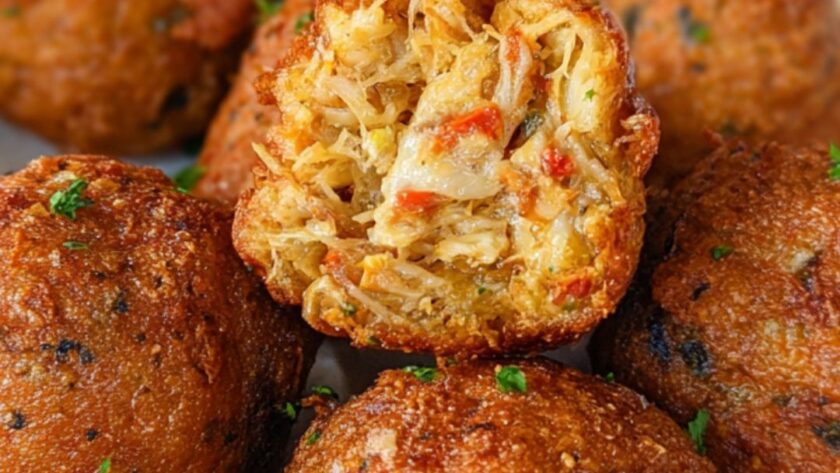
James Martin Crab Beignets are light choux pastry balls filled with white and brown crab meat and lemon zest, fried at 170°C and served with a homemade lemon mayonnaise on the side. The batch makes about 20 beignets and the whole thing takes around 30 minutes from start to plate.
This recipe comes from his book James Martin’s Islands to Highlands, where he made it in Guernsey because the island has a French feel that suits choux pastry. He warns that the oil must not be too hot, because high heat puffs the outside fast while the centre stays raw and doughy inside.
Beating the eggs into the dough a little at a time rather than all at once is what keeps the choux smooth, because too much liquid in one go breaks the emulsion and turns it greasy. The dough is ready when it drops easily from the spoon, and that soft texture is what gives each beignet its crispy shell after frying.
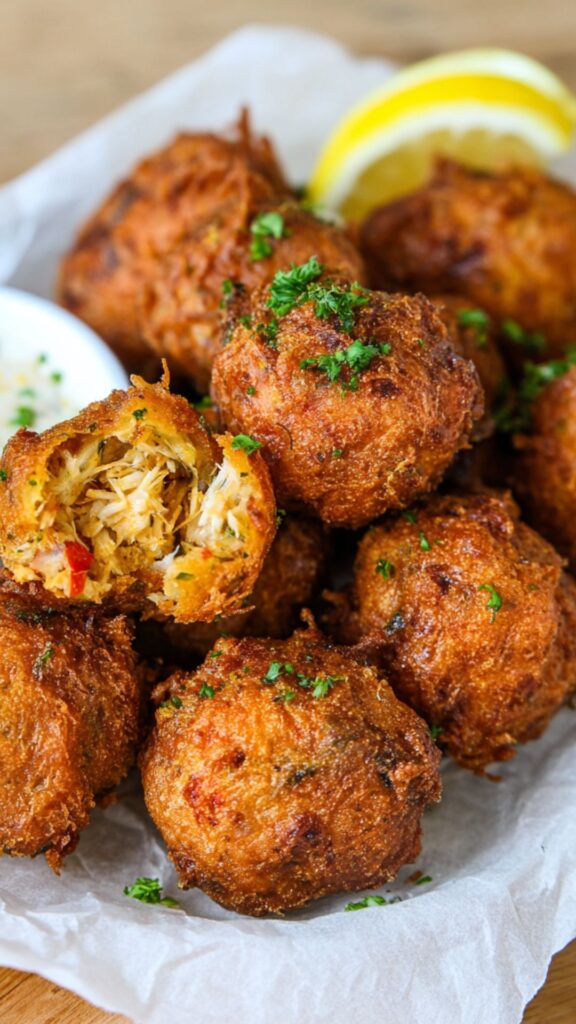

James Martin Crab Beignets
Description
James Martin Crab Beignets from his Islands to Highlands cookbook are crispy choux fritters made with white and brown crab meat, lemon zest, and a simple egg and butter dough, fried until golden and served with fresh lemon mayonnaise.
Ingredients
For the Mayonnaise:
For the Beignets:
Instructions
- Make the mayonnaise: Whisk the egg yolks and mustard together in a large bowl until smooth. Slowly drizzle in the vegetable oil, whisking constantly with an electric hand whisk, until the mixture thickens. Season with salt and lemon juice, then set aside.
- Make the choux dough: Put the butter into a medium saucepan with 200ml water. Heat until the butter melts, then bring to a rolling boil. Add the flour all at once and beat with a wooden spoon until the mixture pulls away from the sides of the pan.
- Add the eggs: Take the pan off the heat and cool slightly for a couple of minutes. Beat in the eggs a little at a time until the dough is soft and drops easily from the spoon
- Fold in the crab: Gently fold in all the white and brown crab meat and the lemon zest. Season with salt and pepper.
- Fry the beignets: Heat the oil to 170°C. Dip a metal tablespoon in oil to grease it, then scoop spoonfuls of the mixture and drop them into the hot oil, about 5 at a time. Fry for 1 to 2 minutes until golden brown, then drain on kitchen paper and sprinkle with salt.
- Serve: Repeat until all the mixture is used. Serve hot with the mayonnaise and lemon halves.
Notes
- James Martin: The idea with the beignets is not to have the oil too hot, otherwise they become quite doughy in the centre.
James Martin: The great thing about them is that they work with veg like courgettes too.
FAQs
Why use both white and brown crab meat?
White meat gives the sweet, clean flake you see when you break a beignet open, but on its own it tastes too mild inside fried choux. Brown meat adds the deeper savoury punch that carries through the crispy shell, which is why both go in together. If you only have white, season more heavily with salt and pepper to fill that gap.
Why fry at 170°C instead of the usual 180°C?
Choux dough is thicker than a standard batter, so it needs more time for the heat to reach the centre without the shell burning. At higher temperatures the outside turns golden too fast while the inside stays raw and heavy. That lower heat gives the dough the time it needs to puff all the way through evenly.
Why grease the spoon with oil before each scoop?
Choux is sticky and clings to dry metal, so without the oil the mixture tears apart as you try to drop it into the fryer. Dipping the tablespoon in oil before every scoop lets the dough slide off in one clean piece and hit the oil in a round shape. Even shapes cook evenly, which is how you avoid beignets that are burnt on one side and pale on the other.
Does the mayonnaise have to be homemade?
The scratch version with egg yolks, Dijon, and fresh lemon juice gives a sharpness that cuts through the fried choux in a way shop-bought cannot match. If time is tight, stirring lemon juice and Dijon into good quality bought mayonnaise gets you close enough. The lemon is the part you cannot skip, since these beignets are rich and need something bright alongside them, much like the sauce on a crab gratin.
Can the same choux base work with other fillings?
The book says courgettes work well, which makes sense because the dough is neutral enough to carry whatever you fold in. Smoked haddock or prawns would also suit the base since the lemon mayonnaise pairs with any seafood. Once you have the choux technique down it opens up a lot of options, and the base works nicely alongside richer dishes like a seafood lasagne.
How far ahead can the dough be prepped before frying?
The finished mixture with crab folded in holds well in the fridge for up to four hours, and cold choux actually keeps its shape better on the spoon. Do not freeze it because ice crystals break the structure and the beignets will not puff when they hit the oil. Ten minutes at room temperature before scooping is enough to get clean drops again.